

Introduction
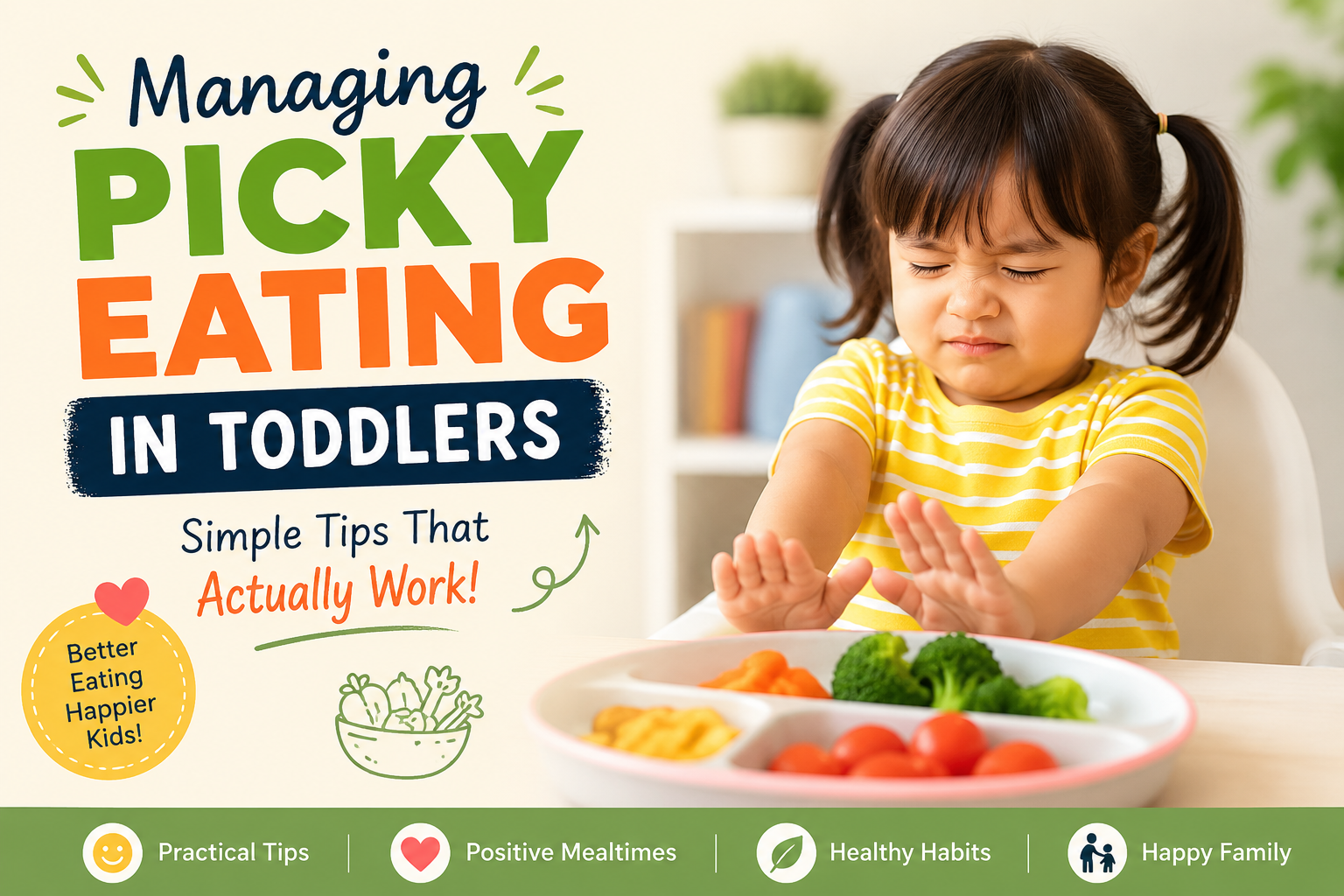
Managing Picky eating in toddler’s is a common concern for many parents, especially between the ages of 1 and 3. Don’t worry—you’re not alone in facing this challenge.
The good news is that picky eating is usually a normal part of development. Toddlers are learning independence, exploring tastes, and sometimes just testing your patience! The key is to handle it calmly and smartly.
In this blog, we’ll walk through why toddlers become picky eaters and share practical, stress-free strategies to make mealtimes easier and healthier for both you and your child.
Why Managing Picky Eating In Toddler’s Is Tough?
Before we fix the problem, let’s understand it.
Toddler’s grow rapidly in their first year, but growth slows down afterward. This means their appetite naturally decreases. So, when your child suddenly starts refusing food, it might not be stubbornness—it could just be biology.
Another reason is independence. Toddlers love saying “no.” It’s their way of expressing control. Food becomes one of the easiest ways for them to do this.So,managing picky eating in toddler’s is difficult.
Also, toddlers are sensitive to taste, texture, and even color. A slightly different texture or unfamiliar smell can make them reject a food instantly.
Keywords: picky eating toddlers, toddler feeding problems, why toddlers refuse food
1. How To Avoid Pressure in Managing Picky Eating In Toddler’s?
One of the biggest mistakes parents make in handling picky eating toddler’s is to eat. While it may seem necessary, it often backfires.
When you pressure a toddler to eat, mealtime becomes stressful. Your child may associate food with anxiety and resist even more.
Instead, try this:
- Offer food calmly
- Encourage, but don’t force
- Accept small portions
Remember, your job is to provide healthy food. Your toddler’s job is to decide how much to eat.
Keyword focus: toddler feeding tips, how to handle picky eaters
2. Introduce New Foods Slowly
Did you know it can take 10–15 tries before a toddler accepts a new food?
Yes, really!
So if your child rejects broccoli today, don’t give up. Try again in a different way—steamed, mashed, or mixed with something they already like.
Simple strategies:
- Pair new food with a favorite food
- Offer tiny portions (less pressure)
- Repeat exposure without forcing
Consistency is key when dealing with picky eating toddler’s.
3. Make Food Fun and Attractive
Toddlers eat with their eyes first. A plain plate may not excite them, but a colorful, creative one might!
Try:
- Cutting fruits into fun shapes
- Arranging food like a smiley face
- Using bright colors (carrots, peas, corn)
Even something simple like serving food in a favorite bowl can make a big difference.
This approach works especially well for healthy meals for toddlers who are reluctant to try new foods.
4. Stick to a Routine
Toddlers thrive on routine. Having fixed meal and snack times helps regulate hunger.
If your child is snacking all day, they won’t feel hungry at mealtime. That’s when picky eating gets worse.
Set a simple routine:
- 3 main meals
- 2 healthy snacks
- Avoid constant grazing
Also, limit juice or milk right before meals, as it can reduce appetite.
Keywords: toddler meal routine, healthy eating habits toddlers
5. Be a Role Model
Your toddler is always watching you—even when you don’t realize it.
If they see you enjoying vegetables and healthy meals, they are more likely to try them too.
Try family meals where everyone eats the same food. Avoid making separate “special meals” for your toddler—it can reinforce picky behavior.
Instead, say:
“Let’s all try this together!”
6. Give Choices (But Smart Ones)
Toddlers love having control, so give them options—but within limits.
For example:
- “Do you want an apple or a banana?”
- “Would you like rice or roti?”
This way, they feel in charge, but you’re still ensuring healthy choices.
Avoid open-ended questions like:
“What do you want to eat?”
(You might get “chocolate” as the answer every time!)
7. Avoid Distractions During Meals
Many parents use TV or mobile phones to make kids eat. While it may work short-term, it creates unhealthy habits.
Distracted eating means your child doesn’t learn hunger cues or enjoy food properly.
Instead:
- Turn off screens
- Sit together at the table
- Talk and engage during meals
This helps build a positive relationship with food.
8. Respect Their Appetite
Some days your toddler may eat a lot, and other days barely anything. That’s normal!
Instead of worrying about one meal, look at their overall intake across the week.
If your child is active, growing, and healthy, there’s usually no need to panic.
Conclusion
Managing picky eating in toddler’s can feel frustrating, but it doesn’t have to be a daily battle. With patience, consistency, and the right approach, you can turn mealtimes into a positive experience.
Remember:
- Don’t force food
- Keep offering variety
- Make meals fun and stress-free
- Trust your child’s hunger cues
Every toddler is different, and progress may be slow—but it will happen.
So take a deep breath, relax, and know that you’re doing a great job. Parenting isn’t about perfection—it’s about persistence.
Keywords used: picky eating toddlers, toddler feeding tips, healthy meals for toddlers, toddler nutrition, how to handle picky eaters, toddler meal routine